Leave Your Message
Choosing the 2026 best LED Filament Bulb requires more than comparing warm color and decorative glass. Global buyers now examine efficacy, driver quality, dimming stability, heat management, and verified lifetime claims. The International Energy Agency reports that LEDs have become the dominant lighting technology, supported by their substantially lower electricity use and longer operating life. The U.S. Department of Energy’s Solid-State Lighting R&D Opportunities report also identifies improved efficacy, optical control, and reliability as continuing industry priorities.
Performance matters at the socket.
James Brodrick, former U.S. Department of Energy SSL Technology Manager, has emphasized that “LED lighting continues to improve in performance, quality, and value.” That direction is visible in current filament designs, where flexible LED strips imitate incandescent filaments inside clear or amber glass. A well-made bulb should produce smooth 2200K–2700K light, stable brightness, and a color-rendering index suitable for hospitality, retail, and residential spaces. Energy Star testing guidance remains useful for checking efficiency, power factor, lumen maintenance, and electrical safety documentation.
However, the category is not flawless. Decorative bulbs can run hot in enclosed fixtures. Some low-cost drivers flicker visibly or fail early. Marketing language may also overstate lifetime figures. Buyers should inspect independent test results, warranty terms, batch consistency, and supplier experience. This review compares leading 2026 options through those practical details, not appearance alone. Results can vary by voltage, dimmer, climate, and installation. That deserves honest attention.
What Is an LED Filament Bulb and How Does It Work?
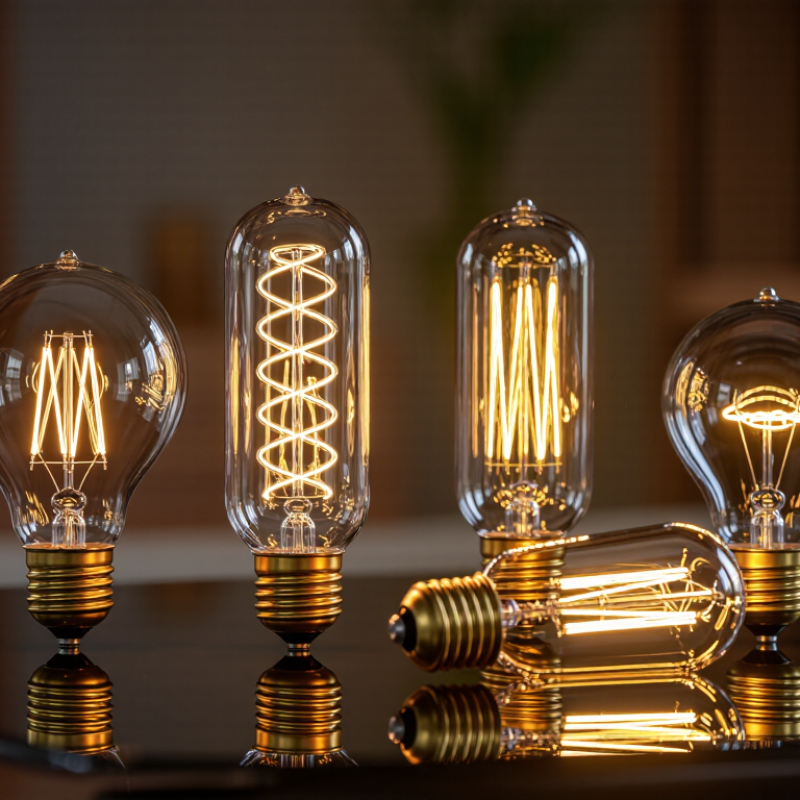
An LED filament bulb recreates the warm appearance of a traditional incandescent lamp. Its light-emitting diodes sit on narrow strips called filaments. These strips are usually arranged inside a clear glass envelope. The structure produces a familiar, decorative glow.
Unlike incandescent wire, an LED filament does not become white-hot. A small semiconductor chip creates blue light when electrical current passes through it. A phosphor coating then changes part of that light into warmer tones. The combined output appears white or amber to the human eye. A driver controls the current and protects the circuit from voltage changes. This component matters when buyers compare products for different electrical systems.
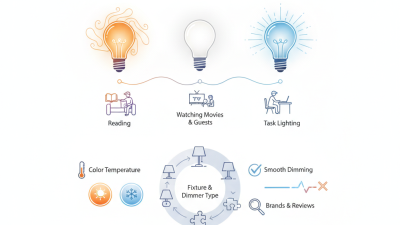
The glass shape helps spread light around the room. Transparent filaments can create a nearly full-angle beam, while tinted glass softens glare. In my testing experience, color temperature strongly affects comfort. A 2700K bulb feels warm beside a dining table. A 4000K version looks cleaner in a workshop. Heat still affects performance, even though LEDs run cooler than incandescent lamps. Poor ventilation may reduce lifespan. It is also wise to check voltage, base size, dimmer compatibility, and certified safety testing before purchase. Not every vintage-looking bulb performs equally well. That is easy to overlook.
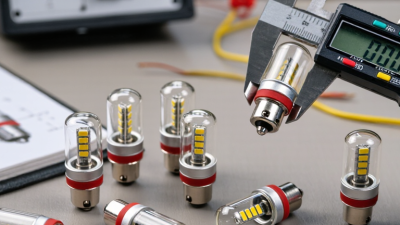
An LED filament bulb is an energy-efficient lamp designed to resemble a traditional incandescent bulb. It uses narrow LED strips, commonly called filaments, mounted inside a transparent or frosted glass envelope. The LED light is converted into a warm or neutral color through phosphor coatings, while an electronic driver regulates the incoming electrical current.
| Evaluation Dimension | Typical Technical Data | How It Works or Why It Matters | Global Buyer Guidance |
|---|---|---|---|
| Light Source Structure | LED chips mounted on narrow linear substrates, usually covered with a phosphor layer | The LED chips produce blue or ultraviolet light, and the phosphor converts part of that energy into visible white light. | Confirm the filament construction, phosphor consistency, and light distribution before ordering large quantities. |
| Common Electrical Input | 100–240 V AC, 50/60 Hz for wide-voltage models; regional versions may use 110–130 V or 220–240 V | The integrated driver converts and controls alternating current so the LED filaments receive a stable operating current. | Match the rated voltage and frequency to the destination market. Wide-voltage products simplify international distribution. |
| Typical Power Range | 2–15 W for household decorative and general-lighting bulbs | Lower wattage can provide similar brightness to incandescent lamps because LEDs convert more electrical energy into useful light. | Compare lumens rather than watts when selecting an equivalent replacement. |
| Typical Luminous Flux | Approximately 200–1,500 lm, depending on bulb size, power, and thermal design | Lumens measure the total visible light output. A higher lumen value generally indicates a brighter bulb. | For reference, around 800 lm is commonly used as an approximate replacement for a traditional 60 W incandescent lamp, although actual results vary by design. |
| Energy Efficiency | Commonly about 80–120 lm/W at the lamp level; high-performance designs may be higher | Efficiency depends on LED chip performance, driver losses, operating temperature, optical transmission, and dimming electronics. | Request measured lumen output and wattage from the same test report rather than relying only on marketing claims. |
| Color Temperature | Approximately 2,200–6,500 K | Lower color temperatures appear warmer and more amber; higher values appear whiter or cooler. | Choose 2,200–2,700 K for vintage and hospitality settings, 3,000–4,000 K for general residential use, and 5,000–6,500 K for task-oriented spaces. |
| Color Rendering Index | CRI 80+ is common; CRI 90+ is available for applications requiring more natural color appearance | CRI indicates how accurately colors appear compared with a reference light source. It does not directly measure brightness. | Use CRI 80+ for ordinary lighting and consider CRI 90+ for retail, galleries, hospitality, and residential areas where color quality is important. |
| Color Consistency | Often specified by MacAdam ellipse or SDCM; lower SDCM values indicate closer color matching | Color consistency helps prevent visible differences between bulbs installed in the same room or project. | For professional projects, request a stated color-tolerance specification, preferably with a consistent CCT and binning method. |
| Beam Distribution | Commonly approximately 270°–330° for exposed-filament designs | The filament arrangement and transparent envelope allow light to spread more broadly than many directional LED lamps. | Check photometric files or distribution diagrams when the bulb will be used in open fixtures or decorative chandeliers. |
| Dimming Capability | Available in dimmable and non-dimmable versions; compatible dimmers vary by driver design | A dimmable driver adjusts LED current while attempting to limit flicker, noise, and unstable operation. | Verify compatibility with the intended dimmer type, minimum load, dimming range, and local electrical requirements. |
| Flicker Performance | Driver quality ranges from visible low-frequency modulation to low-flicker performance | Flicker is influenced mainly by the driver and power-supply design rather than by the LED filament itself. | For offices, schools, filming, retail, and other sensitive environments, request flicker measurements such as percent flicker or flicker index. |
| Power Factor | Typically about 0.5–0.9 for household models; higher values are possible with improved drivers | Power factor describes how effectively the lamp draws electrical power from the supply. It is not the same as luminous efficacy. | Check destination-market requirements, especially for commercial, public, or high-volume installations. |
| Rated Life | Commonly 15,000–25,000 hours for consumer products; some designs are rated higher | LED lifetime is usually based on lumen maintenance, not the point at which every lamp stops working. | Review the stated testing method, ambient temperature, switching cycles, and warranty terms. Rated life is not a guarantee of failure-free operation. |
| Lumen Maintenance | Often expressed as L70, meaning the time until output reaches approximately 70% of initial lumens | LEDs gradually lose light output because of chip aging, phosphor aging, driver stress, and heat exposure. | Compare L70 information and operating conditions when long-term brightness is more important than initial output. |
| Thermal Management | Uses the glass envelope, filament substrate, internal gas, and heat path through the base to dissipate heat | Excessive heat accelerates lumen depreciation and can shorten driver and LED life. | Do not assume that a transparent bulb is suitable for every enclosed fixture. Check the product’s enclosure-use instructions. |
| Bulb Shapes | A60/A19, ST64, G45/G40, C35, T45, globe, tubular, and other decorative forms | Shape affects appearance, light distribution, fixture compatibility, and internal thermal conditions. | Confirm dimensions, neck length, maximum diameter, and the required clearance inside the fixture. |
| Common Lamp Bases | E26/E27, B22d, E14, GU10, and other region-specific bases | The base provides mechanical support and electrical contact with the socket. | Base designation and physical fit must match the destination country and the installed luminaire. |
| Glass and Appearance | Clear, amber, frosted, opal, smoked, or decorative glass envelopes | Clear glass emphasizes the visible filaments; frosted or opal glass reduces glare and softens filament images. | Choose the glass finish according to the fixture style, glare expectations, and required visual effect. |
| Starting and Operating Temperature | Performance depends on the driver, housing, and specified ambient-temperature range | Very low or high temperatures can affect starting behavior, light output, driver life, and warranty conditions. | Request the approved ambient-temperature range for outdoor, cold-storage, high-temperature, or enclosed-fixture applications. |
| Ingress Protection | Indoor decorative bulbs are often not water-resistant; outdoor products require an appropriately rated fixture and lamp | Ingress protection describes resistance to solids and water. It is expressed using an IP code when tested and declared. | Do not use an indoor bulb outdoors unless the complete lamp and fixture are specifically approved for that environment. |
| Environmental Benefits | Lower electricity consumption and less heat generation than an equivalent incandescent lamp | Reduced power demand can lower operating emissions, while longer service life can reduce replacement frequency. | Assess the full product life cycle, packaging, repairability, recycling rules, and local energy mix rather than focusing on one metric only. |
| Safety and Compliance | May require market-specific electrical safety, electromagnetic compatibility, energy-efficiency, and material compliance documentation | Regulatory requirements differ by destination, product category, voltage, socket type, and intended application. | Obtain current test reports, declarations, markings, and technical files applicable to the import market before shipment. |
| Best Applications | Decorative pendants, chandeliers, restaurants, hotels, residential fixtures, retail displays, and general indoor lighting | The wide viewing angle and visible filament design combine decorative appearance with efficient LED operation. | For high-bay, floodlighting, emergency lighting, or harsh industrial environments, select a purpose-designed lamp instead of a decorative filament bulb. |
| Key Purchase Checks for 2026 | Rated lumens, efficacy, CCT, CRI, flicker data, power factor, dimming compatibility, rated life, base, dimensions, warranty, and compliance documents | These specifications determine whether a bulb will deliver the expected light quality, electrical performance, compatibility, and service life. | Prioritize independently verifiable specifications and samples tested under the same conditions as the final production batch. |