Professional manufacturer
Innovating World Trade with Code
Contact us
Leave Your Message

2026 Best LED Replacement Types for Global Buyers

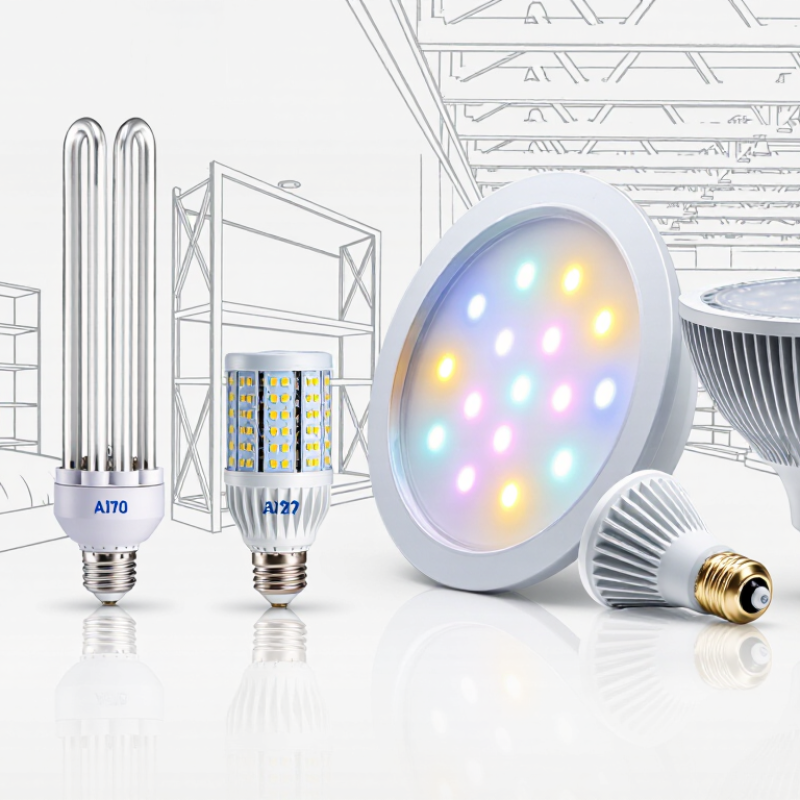
Choosing the right LED Replacement in 2026 requires more than comparing wattage or purchase price. Global buyers must examine socket compatibility, voltage range, beam angle, color temperature, CRI, heat management, and expected service life. An A-lamp may suit a hotel room, while an LED tube or corn bulb may better serve warehouses, workshops, and retail spaces. The wrong base or driver can create flicker, poor dimming, or early failure.

Dr. Nadarajah Narendran, a respected lighting scientist, has emphasized, “Light quality matters, not just energy savings.” That principle remains practical for international sourcing. Buyers should request test reports, photometric data, warranty terms, and recognized safety certifications before approving large orders. Regional requirements can differ, even when two products look identical. Input voltage, frequency, plug design, and environmental conditions deserve close attention. So does supplier consistency.

A reliable LED Replacement should deliver stable illumination, manageable heat, and predictable performance across real installations. Laboratory figures are useful. They are not the whole story. Dust, enclosed fixtures, unstable power, and frequent switching can change results. Some buyers still focus too heavily on lumen output. That is an understandable mistake, but it can hide glare, color shift, or driver weakness.

This guide compares the leading replacement types for global buyers. It also considers where each design performs well, where it struggles, and what specifications deserve challenge before purchase. No single product fits every market. That limitation should remain visible.
2026 Best LED Replacement Types for Global Buyers

What Are LED Replacement Types and Why Do Global Buyers Need Them?

LED replacement types are products designed to replace older lamps while using existing sockets, fixtures, or wiring. Common options include LED bulbs, retrofit tubes, corn lamps, and complete integrated luminaires. Each type solves a different problem. A bulb may replace an incandescent lamp directly. A tube may require ballast compatibility or rewiring. That detail matters.

Global buyers need these choices because buildings use different voltages, sockets, control systems, and safety standards. A replacement must match more than shape. Check the base, input voltage, color temperature, beam angle, dimming method, and operating temperature. A tube can fit physically yet fail electrically. U.S. Department of Energy guidance reports that residential LEDs use at least 75% less energy and last up to 25 times longer than incandescent lighting. Those figures support long-term savings, but actual results depend on installation quality and daily operating hours.

The International Energy Agency has reported that lighting represents about 15% of global electricity consumption. This makes efficient replacement important for factories, hotels, warehouses, and public buildings. Procurement teams should request photometric files, safety test reports, warranty terms, and regional compliance evidence. I would not trust wattage claims alone. Poor heat management can shorten service life, and some low-cost products perform below their published ratings. Buyers should test samples under local voltage and temperature conditions before approving large orders. References: U.S. Department of Energy, LED Lighting; International Energy Agency, Lighting.


How to Classify LED Replacements by Lamp Shape, Base, and Function

2026 Best LED Replacement Types for Global Buyers

LED replacements should be classified by lamp shape, base, and function. Shape determines optical fit. A candle-shaped lamp suits decorative fixtures, while a tubular lamp fits linear housings and display cases. Globe lamps spread light broadly across bathrooms or hospitality spaces. Reflector forms direct stronger beams toward shelves, counters, or artwork.

The base confirms mechanical compatibility. Common formats include screw bases, bayonet bases, bi-pin bases, and recessed double-contact designs. Buyers should verify diameter, pin spacing, voltage, and available clearance. A lamp may fit the socket but fail inside a narrow shade. That happens often. According to the International Energy Agency’s Energy Efficiency 2024 report, lighting uses about 15% of global electricity. Correct replacement choices can therefore affect operating costs at scale.

Function adds the final classification. General-purpose lamps provide broad illumination. High-lumen versions support warehouses and tall ceilings. Dimmable, sensor-ready, and emergency-rated types serve more specialized applications. The U.S. Department of Energy’s 2023 Solid-State Lighting R&D Opportunities report highlights efficacy, color quality, controls, and reliability as key evaluation areas. Check lumens before watts. Check color temperature before appearance. A warm 2700K lamp feels softer than a cool 5000K lamp. Yet classifications are not perfectly universal. Regional socket standards, testing methods, and voltage ranges still create confusion. Careful buyers should compare certified test data, not packaging claims alone.

2026 Best LED Replacement Types for Global Buyers - How to Classify LED Replacements by Lamp Shape, Base, and Function

Lamp Shape Common Designations Typical Base Typical LED Power Typical Luminous Output Common Voltage Range Primary Function Typical Applications Key Buying Checks
A-Shape A19, A60, A67 E26, E27, B22d 4–15 W 470–1,600 lm 100–240 V AC General illumination Household fixtures, offices, hospitality spaces Check bulb diameter, overall length, base fit, color temperature, and dimming compatibility.
Candle / Flame C35, B10, C37 E12, E14, B15d 2–8 W 200–800 lm 100–240 V AC Decorative and ambient lighting Chandeliers, wall sconces, table lamps Verify narrow-neck clearance, flame-tip style, base diameter, and enclosed-fixture suitability.
Globe G45, G50, G80, G95, G125 E26, E27, E14, B22d 4–15 W 400–1,600 lm 100–240 V AC Omnidirectional lighting Vanity lighting, pendant fixtures, decorative installations Measure globe diameter and confirm that the fixture provides adequate ventilation.
Reflector R20, R30, R40 E26, E27 6–18 W 600–1,800 lm 100–240 V AC Directional lighting Track lights, recessed fixtures, display lighting Compare beam angle, reflector diameter, heat dissipation, and glare control.
PAR PAR20, PAR30, PAR38 E26, E27, GU10 7–20 W 700–2,000 lm 100–240 V AC Focused beam lighting Retail displays, galleries, exterior floodlighting Select beam angle, ingress protection, operating temperature, and fixture depth.
MR Reflector MR16, MR11 GU5.3, GU4 3–8 W 250–800 lm 12 V AC/DC Low-voltage spot lighting Cabinet lights, landscape fixtures, accent lighting Check transformer compatibility, polarity requirements, beam spread, and physical pin spacing.
GU10 Spotlight PAR16, GU10 GU10 twist-lock 4–8 W 350–800 lm 100–240 V AC Mains-voltage accent lighting Ceiling spots, kitchens, retail and hospitality fixtures Confirm twist-lock fit, beam angle, cutout depth, and dimmer compatibility.
Tubular T8, T10, T12, T5 G13, G5, R17d 8–30 W 800–3,600 lm 100–277 V AC Linear area illumination Warehouses, offices, workshops, supermarkets Identify tube length, pin configuration, ballast compatibility, wiring method, and rotation angle.
Corn / High-Lumen Retrofit Corn lamp, retrofit lamp E26, E27, E39, E40 20–100 W 2,500–14,000 lm 100–277 V AC High-output retrofit lighting High-bay fixtures, post-top luminaires, industrial fittings Check socket rating, lamp dimensions, ventilation, ballast bypass needs, and enclosed-fixture limits.
Bi-Pin Capsule G4, G6.35, G9 G4, G6.35, G9 1–6 W 100–700 lm 12 V or 100–240 V AC/DC Compact task and decorative lighting Under-cabinet fixtures, small pendants, display cases Verify pin spacing, voltage, driver or transformer requirements, and lamp orientation.
Automotive Wedge T10, W5W, 1156, 1157 Wedge, BA15s, BAY15d 1–5 W 100–800 lm 12 V or 24 V DC Vehicle signaling and interior lighting Position lamps, brake lamps, indicators, cabin lighting Match base geometry, polarity, CAN-bus or load requirements, heat resistance, and legal approval.
Integrated Downlight Recessed LED module, slim panel No replaceable lamp base; direct-wired driver 6–30 W 500–3,000 lm 100–277 V AC input Low-profile general or task lighting Recessed ceilings, corridors, kitchens, commercial interiors Check cutout diameter, driver location, color rendering, dimming protocol, and replacement access.

Note: Specifications are representative market ranges for commonly available LED replacement categories. Actual performance depends on the product design, operating temperature, driver, fixture, regional electrical system, and applicable safety requirements.

Which LED Replacement Type Fits Each Traditional Lighting Application?

Choosing the correct LED replacement depends on the original fixture, not only its socket. For incandescent A19 or A60 lamps, use LED bulbs with 2700–3000K color temperature for homes and hospitality spaces. Dimmable versions need compatible dimmers. The U.S. Department of Energy reports that LEDs can use up to 90% less energy than incandescent lighting and last up to 25 times longer.

For fluorescent T8 or T5 systems, LED tubes may work with existing ballasts or require direct wiring. Verify ballast type, voltage, tube length, and electrical safety before ordering. For GU10 and MR16 halogen lamps, match beam angle carefully. A narrow beam suits display cases, while a wider beam works better for corridors. The International Energy Agency’s Energy Efficiency 2023 report identifies efficient lighting as a mature global energy-saving measure, but real savings depend on operating hours and controls.

High-bay and HID applications need more caution. LED corn lamps can replace some discharge lamps, but thermal space, base size, and enclosed-fixture ratings may limit suitability. Dedicated LED retrofit kits often provide better heat management. In field checks, wattage is frequently overemphasized. It should not be. Compare delivered lumens, glare, color rendering, surge protection, and ambient temperature. Some replacement claims look impressive, yet poor compatibility can create flicker, noise, or early failure. That is where buyers should pause and test one fixture first.

How to Compare Efficiency, Brightness, Color, Lifespan, and Compatibility

2026 Best LED Replacement Types for Global Buyers

How to Compare Efficiency, Brightness, Color, Lifespan, and Compatibility

Choosing an LED replacement in 2026 requires more than matching an old wattage label. In practical installations, compare delivered lumens, not advertised watts. Lumens describe light output, while watts describe energy use. A 10-watt lamp may look weak if its beam spreads too widely. Check the beam angle and mounting height. Efficiency matters, but useful brightness matters more.

Color needs equal attention. A 2700K lamp feels warm, while 4000K appears cleaner and more neutral. For offices, workshops, or retail displays, review the color rendering index and test samples beside real materials. A high rating on paper can still disappoint under poor optics. I have learned not to judge color from a screen. Screens mislead.

Lifespan claims should be read with operating conditions. Heat, enclosed fixtures, frequent switching, and unstable voltage can shorten service life. Look for rated hours, temperature limits, and credible test documentation. Compatibility is equally practical: confirm socket size, regional voltage, dimmer behavior, sensor settings, and physical clearance. Some replacements fit the base but fail electrically. That mistake is expensive. Actual buildings rarely match laboratory conditions, so measured performance and installation limits deserve equal attention.

What Global Buyers Should Check Before Selecting LED Replacements

2026 Best LED Replacement Types for Global Buyers

What Global Buyers Should Check Before Selecting LED Replacements

Choosing an LED replacement starts with lumens, not watts. A lower wattage is not automatically a better replacement. The U.S. Department of Energy reports that LED products can use at least 75% less energy than incandescent lighting and last much longer. However, actual savings depend on operating hours, heat, and power quality.

Check the original lamp’s base, dimensions, beam angle, and rated voltage. A bulb may fit the socket but fail inside a narrow fixture. For warehouses, high-bay LEDs need suitable lumen output and thermal management. For outdoor use, inspect the IP rating, surge protection, and temperature range. Cold regions and humid ports expose weak products quickly. Small details matter.

Color temperature also affects purchasing decisions. Around 2700K suits warm residential spaces, while 4000K to 5000K often supports offices and industrial areas. The International Energy Agency’s Energy Efficiency 2023 analysis identifies efficient lighting as a major electricity-saving opportunity. Still, efficiency alone cannot confirm quality. Check CRI, flicker performance, power factor, warranty terms, and test reports from accredited laboratories. Local safety marks and recycling rules must also be verified before shipment. Some buyers focus too heavily on price. That mistake can create early failures, uneven light, and replacement labor. Product selection is not perfect science, but measured evidence beats a bright promise.