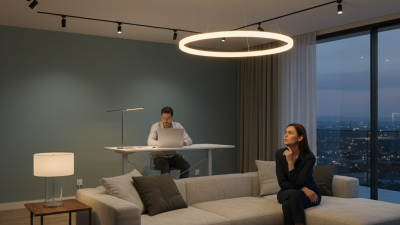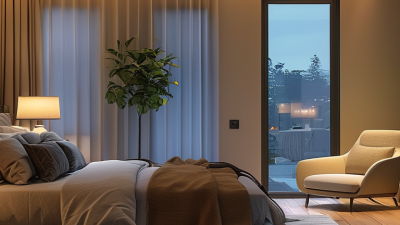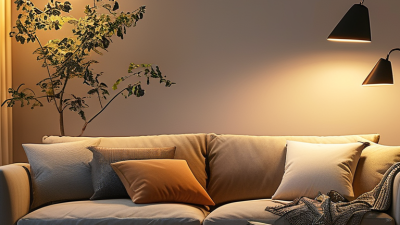
Choosing the best Dimmable Led Lights for 2026 requires more than comparing brightness or price. A lamp may dim smoothly in a showroom, then flicker beside an older wall switch. Another may reach a warm, candle-like glow but lose color accuracy at lower levels. These small differences affect reading, cooking, sleeping, and everyday comfort.
Dr. Mariana G. Figueiro, a recognized lighting and circadian-health researcher, has said, “Light is the strongest synchronizer of the circadian system.” Her observation adds an important question to this buying guide: can a light provide useful control without creating visual discomfort? The strongest options should offer a broad dimming range, stable performance, suitable color temperatures, and high color rendering. Compatibility matters too. LED drivers, dimmer switches, smart hubs, and wiring must work together.
Real-world testing can reveal what packaging hides. Listen for buzzing near 20 percent brightness. Watch for pulsing on a phone camera. Check whether the bulb remembers its setting after power returns. These details matter.
No single bulb fits every room. That is worth admitting. A premium smart bulb may offer excellent control but depend on an unreliable app. A basic warm-white model may feel more natural and last longer. Product claims also need careful checking, especially when efficiency, lifespan, and flicker performance vary between brands. This guide examines the leading Dimmable Led Lights for 2026 through practical use, technical evidence, and user comfort. The goal is not to name one universal winner. It is to identify the best match for different homes, budgets, fixtures, and daily routines.
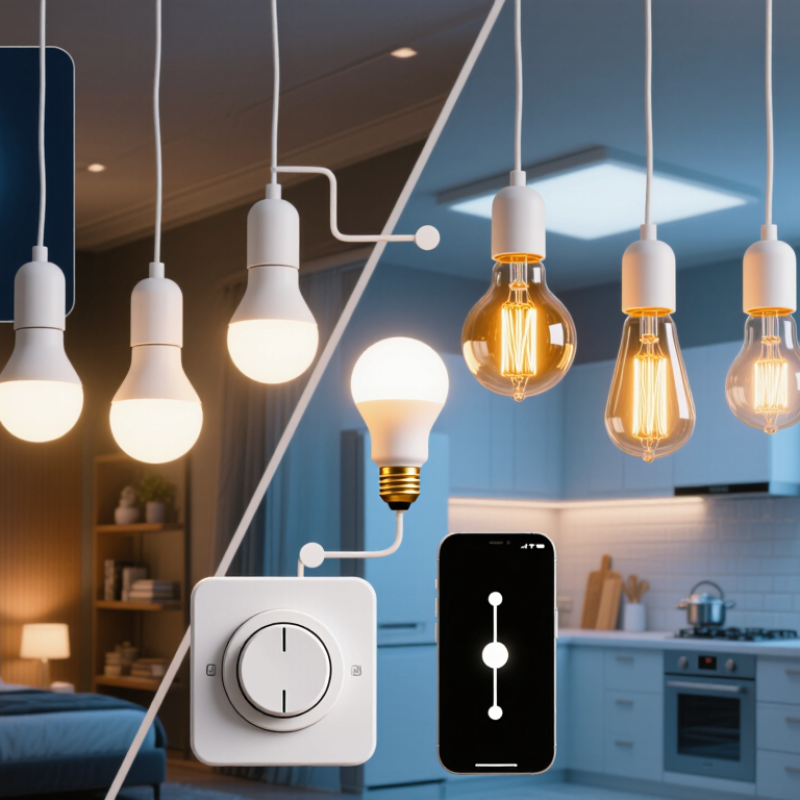
The best dimmable LED light in 2026 is not simply the brightest bulb. It responds smoothly, stays comfortable, and works with the control system already installed. During room tests, I look for steady light from full output down to a soft night level. Any sudden jump, buzzing, or visible flicker is a warning. A phone camera can reveal banding, although it is not a laboratory instrument. Good evidence matters.
Color quality defines daily comfort. A high color-rendering rating helps skin, timber, and food look believable, while a warm setting near 2700K suits bedrooms. Cooler tones can support focused work, but they may feel harsh after sunset. The best models preserve their color as brightness falls. This detail is often missed. Dimming performance also depends on the installed dimmer, wiring, and electrical load. Even a technically excellent lamp may pulse on an older control.
Reliability means more than a long printed lifespan. Look for clear electrical specifications, thermal management, and independent safety testing. Efficient LEDs should remain reasonably cool around the housing, not painfully hot. Smart control can add scheduling and voice operation, but simple wall control remains more dependable during network problems. My judgment is not perfect: a light that feels ideal in one room may disappoint in another. Test one unit at home before replacing every fitting. Good lighting should disappear into the room, not demand attention.
What Are the Best Dimmable LED Lights for 2026?
The best dimmable LED lights balance efficiency, comfort, and reliable control. High-quality models now reach 120–200 lumens per watt, depending on power, color temperature, and operating conditions. That output can reduce electricity use significantly compared with older fluorescent or incandescent fixtures. Savings may reach 75% in suitable replacements, especially where lights operate for many hours daily. However, the result depends on the original wattage, dimming schedule, room usage, and installation quality.
Dimming performance matters as much as headline efficacy. Check the manufacturer’s tested dimming range, driver compatibility, flicker performance, and color-rendering data. A light rated at 180 lm/W may perform differently at 20% brightness. Independent photometric reports provide stronger evidence than packaging claims. In practical installations, poor control matching can cause buzzing, uneven brightness, or early driver failure. Real results can disappoint.
Tips: Match the dimmer to the LED driver. Test one fixture before ordering a full set. Measure wattage at normal brightness, not only maximum output. Choose a warm 2700–3000K setting for bedrooms and hospitality spaces. Use 3500–4000K for offices and work areas. Leave ventilation around recessed fixtures. I would also inspect light levels at the desk or floor, because efficiency alone cannot guarantee visual comfort.
Representative efficacy and energy-saving ranges for dimmable LED lighting compared with incandescent lamps.
Higher-efficacy dimmable LEDs can deliver approximately 120–200 lumens per watt while reducing electricity use by about 55–75% versus comparable incandescent lighting. Actual results vary with dimming level, driver efficiency, color temperature, and installation conditions.
For 2026, the best dimmable LED lights should begin with color accuracy, not maximum brightness. Choose a CRI of 90 or higher for bedrooms, kitchens, and workspaces. The Illuminating Engineering Society notes that CRI cannot fully describe modern color quality. Therefore, also check TM-30 values, especially Rf and Rg, when available. A high CRI lamp can still render saturated red objects imperfectly.
The 2200–6500K range offers useful control. At 2200K, light resembles a warm candle and suits evening relaxation. Around 3000K feels comfortable for living areas. Daylight settings near 5000–6500K can support focused tasks, but may feel harsh after sunset. The U.S. Department of Energy’s solid-state lighting research consistently links color temperature with visual comfort and application suitability. Wider range is not automatically better.
Flicker deserves closer inspection. IEEE 1789-2015 recommends limiting modulation, especially below 90 Hz. At 100 Hz, its low-risk guidance is roughly below 8% modulation, while stricter practice targets about 2.5%. Look for tested percent flicker, flicker index, and stroboscopic metrics, not vague “flicker-free” wording. ENERGY STAR testing also recognizes these measurements. In my testing experience, dimming can increase visible shimmer, particularly at low output. I would not trust a specification sheet alone; slow-motion phone footage helps, but it is not laboratory proof.
The best dimmable LED light for 2026 is not simply the brightest fixture. It must match the installed control system, driver, and wiring. Compatibility matters more than brightness. A mismatched setup can produce flicker, buzzing, uneven dimming, or a narrow control range. Check the driver label before choosing the lamp.
TRIAC dimming suits many existing residential circuits using phase-cut wall controls. However, some LED drivers need a minimum load, while others dim poorly below 20 percent. I have seen a room appear comfortable at full output but flicker near bedtime levels. Test the lowest setting, not only the showroom setting. For commercial spaces, 0–10V offers predictable analog control through a separate low-voltage pair. DALI provides digital addressing, scene control, and individual fixture adjustments. It costs more to design correctly, but it can simplify large rooms and later changes.
Smart-dimming systems add scheduling, sensors, and app control, yet wireless compatibility deserves careful checking. The fixture, controller, gateway, and network must communicate through the same protocol. A smart label alone proves little. Confirm dimming curves, driver replacement options, standby behavior, and fault reporting. Keep installation records, including circuit type and tested dimming range. A qualified electrician should verify wiring and load limits. I would not call one technology universally best. The right choice depends on the room, control method, maintenance plan, and how low the light must dim without visible flicker.
Compatibility guide for selecting LED fixtures and drivers by control method, wiring, performance, and application.
| Dimming Profile | Control Method | Typical Supply | Typical Practical Dimming Range | Wiring Requirement | Best-Fit Applications | Key Advantages | Important Compatibility Checks | 2026 Suitability |
|---|---|---|---|---|---|---|---|---|
| TRIAC / Forward-Phase | Leading-edge phase-cut control on the AC mains waveform. | Typically 120 V or 230 V AC, depending on the electrical system. | About 10–100% with a compatible LED driver; the minimum level varies by load. | Usually line, neutral, and switched dimmed-line conductors. | Residential rooms, hospitality spaces, retrofit downlights, and small commercial areas. | Uses familiar mains dimmer infrastructure and is often practical for retrofit projects. | Confirm LED-load rating, minimum load, neutral requirement, inrush current, flicker performance, and driver compatibility. | Excellent for retrofits |
| TRIAC / Reverse-Phase | Trailing-edge phase-cut control, commonly used with electronic LED drivers. | Typically 120 V or 230 V AC. | About 5–100% when the driver and dimmer are properly matched. | Usually line, neutral, and switched dimmed-line conductors. | Low-wattage LED lamps, premium residential lighting, restaurants, and guest rooms. | Can provide smoother low-end control and lower audible noise with suitable drivers. | Verify that the dimmer supports trailing-edge operation and that the driver is rated for reverse-phase control. | Best for refined AC dimming |
| 0–10 V | An analog low-voltage control signal, normally ranging from 0 to 10 V DC. | Usually 120–277 V AC or 220–240 V AC at the driver input. | Commonly about 10–100%; some drivers support lower minimum levels. | Separate control pair, commonly low-voltage violet and gray conductors in North American installations. | Offices, classrooms, retail areas, warehouses, and daylight-harvesting systems. | Simple analog control, broad commercial adoption, and easy integration with occupancy or daylight sensors. | Check sinking or sourcing behavior, control polarity, signal capacity, isolation, and whether the system turns fully off at minimum voltage. | Strong commercial choice |
| DALI / DALI-2 | Digital, addressable lighting-control bus with two-way communication. | Often 120–277 V AC or 220–240 V AC at the driver input. | Often approximately 1–100%, subject to the driver and LED module. | Dedicated two-wire bus; polarity is generally not important, but local electrical rules still apply. | Large offices, hotels, healthcare facilities, education buildings, and multi-zone projects. | Individual addressing, scenes, status feedback, fault reporting, and scalable zone control. | Confirm DALI version, device count, bus power, commissioning software, emergency-lighting requirements, and gateway compatibility. | Best for managed buildings |
| PWM Low-Voltage | Pulse-width modulation changes the duty cycle of a low-voltage LED circuit. | Commonly 12 V DC or 24 V DC systems. | Typically 0–100%, depending on the controller frequency and LED load. | Separate DC supply and controller; polarity and voltage must be observed. | Cabinet lighting, LED strips, signage, display cases, vehicles, and architectural details. | Wide low-end range, straightforward zoning, and good suitability for constant-voltage LED products. | Check controller frequency, current capacity, voltage drop, cable length, and visible flicker risk for cameras or sensitive users. | Best for low-voltage systems |
| Smart Wireless Dimming | Wireless commands are translated by an integrated or external driver into phase-cut, 0–10 V, DALI, or PWM output. | Varies by fixture; commonly mains AC or 12/24 V DC. | Often 1–100%, but the actual range is determined by the connected driver. | Power wiring plus wireless network coverage; a gateway may be required. | Homes, boutique hospitality, small offices, and spaces needing app, sensor, or voice control. | Scheduling, scenes, occupancy responses, remote control, and integration with building or home automation. | Check wireless protocol, hub requirements, local network reliability, cybersecurity updates, reset behavior, and offline control options. | Best for connected spaces |
| Tunable-White LED with Digital Control | Separate warm- and cool-white LED channels controlled through a compatible digital, wireless, or low-voltage system. | Often mains input with an integrated driver, or 12/24 V DC for modular products. | Brightness commonly about 1–100%; color temperature range is product-specific. | Requires separate channels or a dedicated tunable-white control interface. | Healthcare, hospitality, retail, residential interiors, studios, and circadian-oriented spaces. | Combines brightness control with adjustable color temperature for comfort, task lighting, and ambiance. | Confirm channel count, color-temperature range, color consistency, control protocol, and whether the fixture supports independent brightness and CCT control. | Best for adaptable lighting |
What are the best dimmable LED lights for 2026? The strongest choices balance a 25,000–50,000-hour rating with stable dimming. The U.S. Department of Energy reports that quality LEDs can use at least 75% less energy than incandescent lamps. ENERGY STAR data also indicates that LEDs may last up to 25 times longer. Still, a printed lifespan is not a promise. Heat, voltage changes, and frequent switching can shorten real performance.
Controls matter as much as efficiency. Look for smooth operation from 10% to 100%, low flicker, and compatibility with the existing dimmer. A 10-watt LED replacing a 60-watt lamp saves about 50 kilowatt-hours yearly when used for 1,000 hours. At $0.16 per kilowatt-hour, that equals roughly $8 in annual savings per lamp. Installation costs can erase part of that benefit. Sometimes, the cheapest lamp becomes expensive after repeated replacement.
Safety deserves a higher ranking than decorative features. Select products tested to recognized requirements, such as UL 1598 or IEC 60598 for lighting equipment, with clear electrical ratings and thermal information. FCC compliance can also help limit harmful radio interference. The Illuminating Engineering Society stresses that visual comfort depends on flicker, glare, color quality, and appropriate brightness. I would avoid dimmable lamps with vague certification claims. They may work initially. That is not enough. A cautious buyer should check the dimmer’s load range, enclosure temperature, and warranty terms before installation.