Professional manufacturer
Innovating World Trade with Code
Contact us
Leave Your Message

China Top 10 White Light Bulb Suppliers for Global Buyers

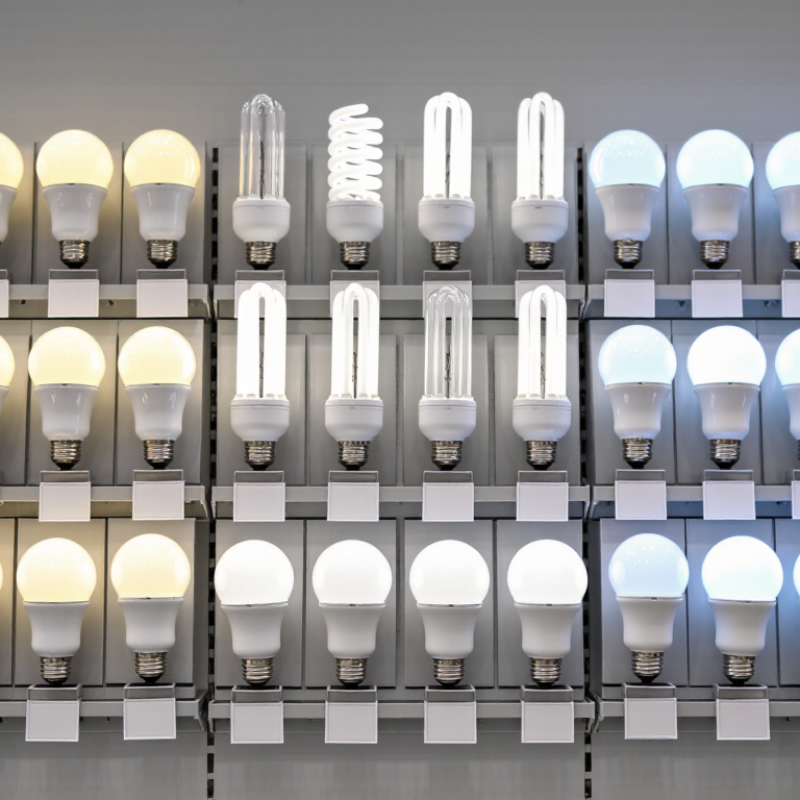
For global buyers, selecting reliable White Light Bulbs suppliers requires more than comparing product photos and quoted prices. Color temperature, lumen output, color rendering, heat management, and driver quality can affect every installation. A bulb labeled “white” may produce 3000K warm white, 4000K neutral white, or 6500K daylight. The difference is visible on a retail shelf.

This guide introduces China’s top 10 White Light Bulbs suppliers for international sourcing projects. It considers manufacturing experience, product range, factory capacity, export support, and quality-control practices. It also examines practical details, including sample policies, minimum order quantities, packaging strength, customization options, and estimated lead times. Buyers should request test reports, product specifications, and applicable compliance documents before placing large orders. CE, RoHS, and IEC-related documentation may support evaluation, but documents still require verification.

Real sourcing is rarely perfect. A supplier with excellent pricing may offer slower communication. Another may provide impressive samples but limited production flexibility. Our comparison aims to make these trade-offs clearer, not hide them. Data can change.

We also consider how suppliers respond after the sale. Do they investigate flickering complaints? Can they replace damaged cartons? Are technical answers specific, or merely polite? These details matter when thousands of bulbs reach hotels, offices, warehouses, or residential projects. Factory visits, independent inspections, and small trial orders remain sensible safeguards. No ranking can replace buyer judgment. Still, this overview offers a practical starting point for identifying capable Chinese manufacturers and building a more dependable supply chain.
China Top 10 White Light Bulb Suppliers for Global Buyers

How White Light Bulb Suppliers Are Evaluated

How White Light Bulb Suppliers Are Evaluated

A reliable supplier is judged beyond a bright showroom sample. Buyers should compare lumens per watt, color temperature, color rendering index, flicker, and lifetime claims. The U.S. Department of Energy reports that residential LEDs use at least 75% less energy and last up to 25 times longer than incandescent lamps. Yet efficiency numbers can change after thermal testing. Request test reports, not only product labels.

Technical Evidence Matters

The DOE Solid-State Lighting R&D Opportunities report notes that laboratory LED efficacy can exceed 200 lumens per watt, while commercial products often perform lower. This gap deserves attention. Ask whether results follow LM-79, LM-80, and TM-21 methods. Check lumen maintenance, driver temperature, power factor, and failure records. A claimed 50,000-hour life is incomplete without operating conditions.

Factory Evaluation

Factory evaluation adds practical confidence. Review ISO 9001 procedures, incoming component checks, aging tests, and batch traceability. Confirm samples match mass production. The IEA continues to identify efficient lighting as an important energy-saving opportunity, but compliance varies across markets.

Compliance and Warranty Review

Suppliers should provide accurate declarations for safety, electromagnetic compatibility, and hazardous-substance requirements. Warranty terms also need detail, including exclusions and replacement procedures. This process is not flawless. Independent laboratory verification still matters. Suppliers that answer slowly or avoid raw test data deserve a lower score, even when their samples look excellent.
China’s Top 10 White Light Bulb Suppliers at a Glance

China Top 10 White Light Bulb Suppliers for Global Buyers

China’s Top 10 White Light Bulb Suppliers at a Glance

This buyer-focused review examines ten Chinese suppliers serving residential, commercial, and project lighting markets. The selection considers manufacturing depth, export experience, product testing, and communication reliability. Most offer LED bulbs in common shapes, including A60, candle, globe, and high-lumen models. They typically support 2700K to 6500K color temperatures, with neutral white ranges popular in offices and retail spaces. Samples matter.

The strongest suppliers provide photometric data, safety documents, and clear statements about rated life. Buyers should check lumen output, color rendering, power factor, flicker performance, and heat management. An attractive price can hide unstable drivers or thin aluminum heat sinks. Several factories support customized bases, wattages, packaging, and smart-control options. However, customization often raises minimum order quantities. Confirm this before approving artwork. Factory audits, production photos, and inspection records provide useful evidence. They do not replace independent testing.

A practical comparison should also review lead times, spare-part policies, warranty handling, and response speed. Reliable exporters explain carton dimensions, loading quantities, and destination-market requirements without vague promises. Some suppliers appear capable online but provide incomplete test reports. That is a warning, not a final judgment. Ask for current samples and compare them after continuous operation. White light can shift slightly with heat and age. This detail is easy to miss. The list is useful, yet no ranking stays perfect for every buyer. Application, budget, and compliance expectations still influence the best choice.

China Top 10 White Light Bulb Suppliers for Global Buyers

China’s Top 10 White Light Bulb Suppliers at a Glance

This chart presents common nominal correlated color temperature (CCT) options found in white light bulb catalogs, ranging from warm white to daylight white. Buyers can use CCT coverage as a practical technical benchmark when comparing supplier product ranges, alongside lumen output, energy efficiency, CRI, certifications, and warranty terms.

Supplier Profiles, Product Ranges, and Export Capabilities

China Top 10 White Light Bulb Suppliers for Global Buyers

The leading Chinese suppliers usually cover LED bulbs, smart lamps, downlights, tubes, and industrial fixtures. Their white-light ranges often include 2700K warm white, 4000K neutral white, and 6500K cool white. Common products use E27, B22, GU10, or G9 bases. Many suppliers offer 100–240V input, 50/60Hz operation, and CRI 80 or higher. Useful details.

The International Energy Agency reports that lighting consumes about 15% of global electricity. This supports continued demand for efficient LED products. The U.S. Department of Energy also reports rapid progress in LED efficacy, with advanced devices exceeding 200 lumens per watt under laboratory conditions. Commercial performance is usually lower. Buyers should check real test data, not only catalogue claims. A serious supplier can provide LM-79 reports, lifetime testing, safety files, and production samples.

Export capability differs sharply across the top ten profiles. Some factories maintain automated assembly lines and serve distributors in Europe, North America, Africa, and Southeast Asia. Others focus on smaller OEM orders, private packaging, or regional voltage requirements. Check monthly capacity, minimum order quantity, lead time, carton protection, and after-sales procedures. Certification support matters, including CE, RoHS, UKCA, or local approvals where required. A polished catalogue proves little. Factory audits, batch records, and independent inspections provide stronger evidence. Even experienced buyers can miss driver quality, flicker, or color consistency. That is worth reconsidering.

Comparing Quality, Certifications, Pricing, and Customization

China Top 10 White Light Bulb Suppliers for Global Buyers

Comparing Quality, Certifications, Pricing, and Customization

A shortlist of ten Chinese white light bulb suppliers should begin with measurable performance, not attractive catalogs. Global buyers compare beam consistency, lumen output, color temperature, and service stability. For office lighting, 4000K neutral white and low flicker can matter more than a bright product photograph. Ask for sample readings. Use an integrating sphere report when possible. Small differences become visible across a warehouse ceiling.

Certification evidence deserves careful checking. Request current CE, RoHS, EMC, and safety test documents matched to the exact model. An ISO 9001 certificate supports process control, but it does not guarantee every shipment. That distinction is easy to miss. Compare pricing on the same basis: EXW or FOB, MOQ, warranty length, packaging, and included accessories. A cheap unit may use thinner aluminum or a weaker driver. Sometimes, the lowest quote becomes the expensive option.

Customization separates flexible suppliers from simple traders. Reliable suppliers should explain what can change without damaging performance. Options may include E27 or B22 bases, 3000K to 6500K color temperatures, dimming, labels, cartons, and plug designs. Ask for a pilot order before committing to a container. Check carton drop strength, driver heat, and actual power consumption. Lead-time promises can also be optimistic. Build inspection points into the purchase agreement. One weakness remains: many comparisons rely on samples, not long-term failure data. Request field feedback where available, and record your own results.

Steps for Choosing and Importing from a Chinese Supplier

Choosing among China’s top white light bulb suppliers requires a measurable specification, not attractive catalog photos. The International Energy Agency reports that lighting uses about 15% of global electricity. Energy efficiency matters. Define lumen output, color temperature, CRI, beam angle, base type, voltage, dimming, power factor, and flicker limits before requesting quotations. A 4000K bulb may look neutral in an office but too cold in a bedroom. Small differences matter.

Shortlist suppliers with verifiable export records, factory ownership, quality systems, and recent third-party test reports. Request samples from at least three factories and test them for brightness, color consistency, heat, startup time, and package damage. The U.S. Department of Energy states that LED bulbs use at least 75% less energy and can last up to 25 times longer than incandescent bulbs. Still, claimed lifetime figures deserve caution. Ask for LM-80 or equivalent evidence, warranty terms, batch traceability, and a written replacement process. I have seen perfect samples fail after mass production.

Before ordering, confirm the correct tariff classification, destination-market safety requirements, labeling, and recycling obligations with a customs professional. Check whether the supplier can provide compliant declarations and test documents for your market. Agree on Incoterms, payment milestones, carton dimensions, spare percentages, and pre-shipment inspection criteria. Use moisture-resistant cartons and protective separators for long sea transport. Review the commercial invoice, packing list, bill of lading, and certificate requirements before shipment. A cheaper unit price can become expensive after testing, delays, and rejected cartons.

China Top 10 White Light Bulb Suppliers for Global Buyers - Steps for Choosing and Importing from a Chinese Supplier

No. Selection or Importing Dimension Verified Technical or Commercial Benchmark Recommended Buyer Action Documents or Evidence to Request
1 Voltage and Frequency Compatibility China commonly supplies lamps designed for 220–240 V AC and 50 Hz. Markets such as the United States and Canada commonly use 120 V AC and 60 Hz. Match the lamp input rating, base type, and frequency with the destination market. Do not assume that a 220–240 V model is suitable for a 120 V electrical system. Product datasheet, product label artwork, electrical test report, and pre-production sample.
2 Light Output and Efficiency General household LED bulbs are commonly specified by lumens rather than incandescent wattage. Typical household models range from approximately 450 to 1,600 lumens, while efficiency varies by design and operating conditions. Compare lumen output, efficacy in lumens per watt, power consumption, beam angle, and lumen-maintenance data instead of comparing wattage alone. LM-79-style photometric report, integrating-sphere test data, energy label information, and approved sample.
3 Color Temperature and Color Rendering Common white-light options include approximately 2700–3000 K for warm white, 3500–4100 K for neutral white, and 5000–6500 K for cool or daylight white. CRI 80 or above is widely used for general lighting; higher CRI is preferred for color-sensitive applications. Specify CCT tolerance, CRI minimum, chromaticity limits, and whether the shipment must use one consistent color bin. Spectral test report, color-bin declaration, CCT and CRI specifications, and retained production samples.
4 Lamp Base and Mechanical Fit E27 and E14 screw bases are common in many 220–240 V markets, while E26 is common in North America. Bayonet bases such as B22 are also used in selected markets. Confirm base standard, bulb dimensions, neck diameter, overall height, heat-sink clearance, and compatibility with the intended fixture. Dimensioned drawing, base-gauge test record, mechanical fit sample, and packaging specification.
5 Safety and Performance Standards IEC 62560 covers safety specifications for self-ballasted LED lamps for general lighting services. IEC 62471 addresses photobiological safety assessment for lamps and lamp systems. Identify the applicable destination-market standards and require test reports for the exact model, rated input, base, and revision of the product. Laboratory test report, declaration of conformity, safety construction file, and model-specific technical documentation.
6 Market Access and Environmental Compliance European Union shipments may require applicable CE obligations, electromagnetic compatibility compliance, low-voltage safety compliance where applicable, and RoHS substance restrictions. U.S. products with digital or switching electronics may require FCC Part 15 assessment. Map each destination country’s legal requirements before ordering. Confirm whether the supplier’s documents cover the exact SKU and intended sales channel. Declaration of conformity, EMC report, RoHS material declaration, FCC-related records where applicable, and technical file index.
7 Quality-Control Plan A practical inspection plan can include incoming-material checks, production inspection, aging or burn-in verification, electrical safety checks, cosmetic inspection, and final random inspection. AQL sampling should be agreed before production. Define critical, major, and minor defects; approve a golden sample; and use an independent inspection company or documented factory inspection process before shipment. Quality-control plan, inspection checklist, defect classification, sample approval record, and final inspection report.
8 Minimum Order Quantity and Lead Time Stock products may be available in smaller quantities, while custom wattage, color temperature, packaging, or certification work usually increases the minimum order quantity and production lead time. A common planning range for customized production is approximately 30–60 days after specification and artwork approval. Obtain a written quotation that separates sample time, tooling time, production time, inspection time, and shipping time. Confirm the production calendar before paying the balance. Pro forma invoice, production schedule, approved artwork, sample timeline, and written lead-time commitment.
9 Shipping Terms, Classification, and Packaging LED lamps are commonly classified under HS 8539.52 in the Harmonized System 2022 structure, subject to confirmation by the importing customs authority. Incoterms 2020 define responsibilities for transport, insurance, and customs activities. ISPM 15 rules apply to regulated solid-wood packaging. Confirm the tariff classification with a customs broker, select an Incoterm that matches the buyer’s control level, and verify carton strength, labeling, palletization, and moisture protection. Commercial invoice, packing list, certificate of origin where required, transport document, carton specification, and wood-packaging treatment mark if applicable.
10 Payment Protection and After-Sales Terms International purchase contracts should clearly define product specifications, inspection rights, delivery dates, warranty period, replacement procedure, spare-part responsibility, and remedies for non-conforming goods. Use staged payment linked to approved samples and inspection results. Avoid paying the full balance before the goods pass the agreed inspection unless commercially justified and contractually protected. Signed sales contract, pro forma invoice, warranty terms, inspection clause, corrective-action process, and communication records.
Planning figures such as lead time and commercial quantities are indicative market benchmarks, not universal legal requirements. Final compliance, tariff classification, and import documentation should be confirmed for the specific destination country and product configuration.