How to Choose the Best Led Filament Bulb for Your Home?
In today's energy-conscious world, choosing the right Led Filament Bulb for your home is crucial. According to a report by the U.S. Department of Energy, LED bulbs have the potential to save up to 75% more energy than traditional incandescent bulbs. This statistic underscores the importance of making an informed choice.
Lighting expert Dr. Sarah Turner emphasizes, "Selecting the ideal Led Filament Bulb can enhance both ambiance and energy efficiency." With the market flooded with options, finding the best fit for your needs is not always straightforward. Consider factors such as brightness, color temperature, and design.
Understanding these elements can lead to significant energy savings and aesthetic improvements. Nevertheless, consumers often struggle with overwhelming choices, making the selection process daunting. Remember, the perfect Led Filament Bulb should align with both your style and efficiency goals.
Understanding LED Filament Bulbs and Their Benefits
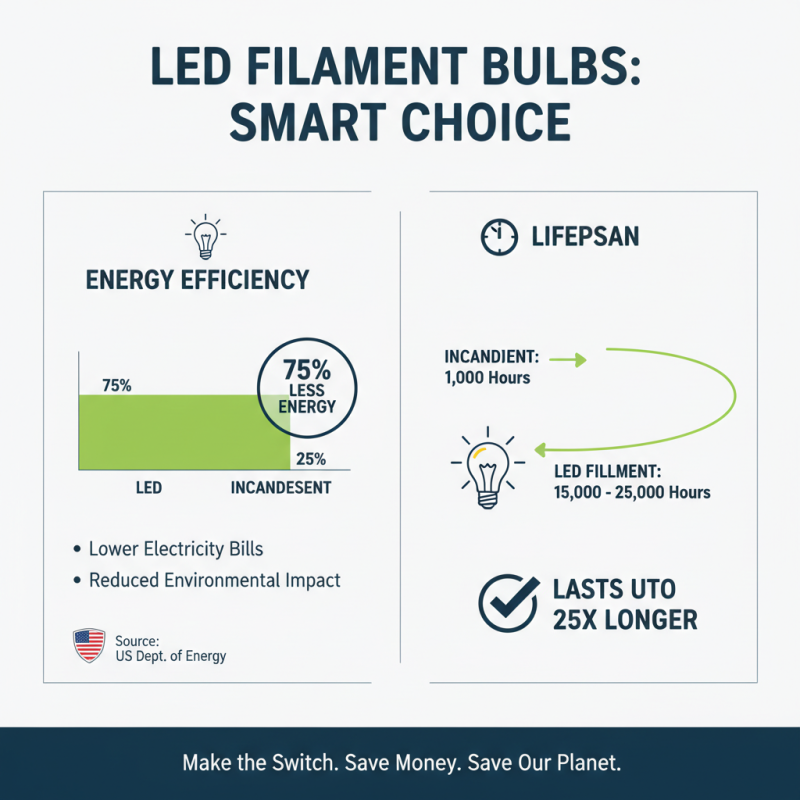
LED filament bulbs combine modern technology with classic aesthetics. Their design mimics traditional incandescent bulbs, making them popular for home use. According to a report by the U.S. Department of Energy, LED bulbs use at least 75% less energy than incandescent bulbs. This efficiency translates into significant cost savings on electric bills.
The benefits of LED filament bulbs extend beyond energy savings. They have a longer lifespan, often lasting up to 25,000 hours. This durability means fewer replacements and less waste, aligning with sustainability goals. Moreover, they emit less heat. This characteristic makes them safer, reducing the risk of burns or fire hazards.
People may overlook the color temperature when selecting bulbs. The warmth of the light can impact mood and ambiance. Many LED filament bulbs offer various color temperatures, from warm white to cool daylight. This flexibility allows for personalized lighting in every room. However, not all options provide dimming features. It’s essential to check compatibility before making a purchase.
How to Choose the Best LED Filament Bulb for Your Home?
| Feature |
Description |
Benefits |
| Energy Efficiency |
LED filament bulbs use a fraction of the energy compared to traditional incandescent bulbs. |
Lower electricity bills and reduced carbon footprint. |
| Lifespan |
Lasts up to 25,000 hours, much longer than standard bulbs. |
Less frequent replacements and maintenance. |
| Light Quality |
Provides warm and inviting light similar to incandescent bulbs. |
Enhances home ambiance and comfort. |
| Dimmability |
Many LED filament bulbs are compatible with dimmer switches. |
Allows for adjustable lighting based on mood and activity. |
| Design |
Available in various shapes and styles, often with vintage aesthetics. |
Blends seamlessly with stylish decor while providing modern efficiency. |
| Color Temperature |
Common options include warm white (2700K) and cool white (5000K). |
Choose based on desired atmosphere for different spaces. |
Key Factors to Consider When Choosing LED Filament Bulbs
When selecting LED filament bulbs for your home, several key factors should guide your choice. First, consider the brightness level, typically measured in lumens. Depending on the area you want to light, you might need bulbs with varying lumen outputs. A cozy living room may require softer light, while a bright kitchen benefits from higher lumens.
Another crucial consideration is the color temperature. LED bulbs come in different white tones, such as warm white or cool white. Warm white creates an inviting atmosphere, ideal for bedrooms. Cool white, on the other hand, suits task-heavy spaces. Review personal preferences and how each bulb's hue impacts your comfort.
Moreover, the shape and design of the bulb are important. These bulbs come in various forms, including vintage-inspired designs. While aesthetics matter, practicality does too. Check for compatibility with existing fixtures. A bulb looking good but not fitting can lead to disappointment. Reflect on your needs; the perfect bulb should balance appearance and function.
Comparison of Key Factors When Choosing LED Filament Bulbs
Different Types of LED Filament Bulbs Available in the Market
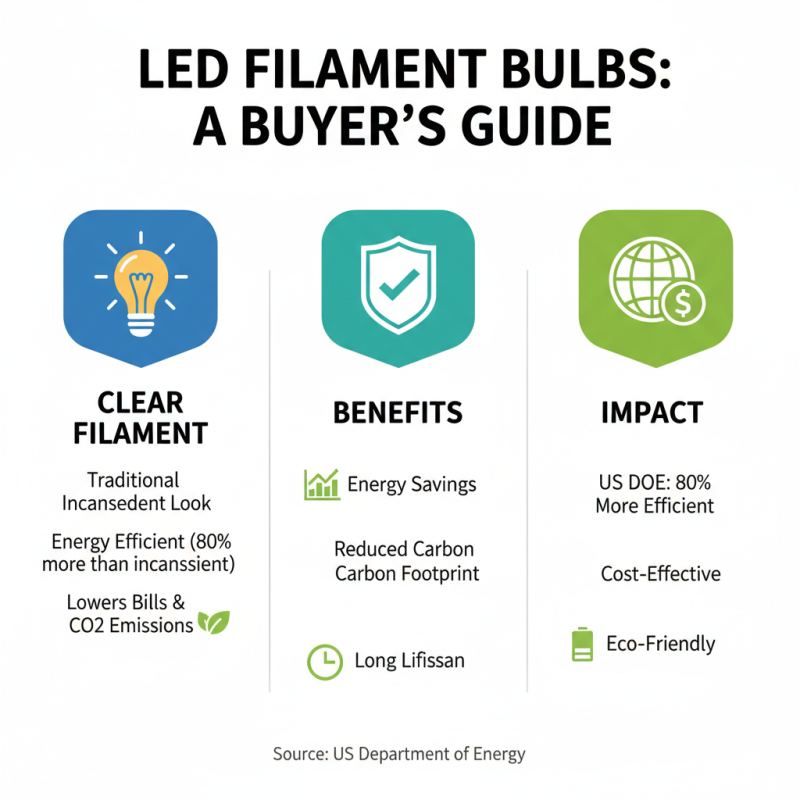
When selecting LED filament bulbs, it’s essential to understand the different types available in the market. One popular choice is clear filament bulbs. These bulbs mimic the traditional incandescent appearance while providing energy efficiency. According to the U.S. Department of Energy, LED bulbs can be 80% more efficient than their incandescent counterparts. This efficiency not only lowers energy bills but also contributes to a reduction in greenhouse gas emissions.
Another type is frosted filament bulbs. These bulbs offer a softer diffusion of light, creating a warm ambiance. They are particularly suitable for living rooms and bedrooms, where cozy lighting is preferable. A study by the Lighting Research Center shows that the color temperature can affect mood. Warmer light can help promote relaxation, making frosted bulbs a wise choice for conducive environments.
Dimmable filament bulbs also offer flexibility, allowing users to adjust brightness for various settings. This feature can contribute to better energy management and personalization of lighting spaces. However, some dimmable options may not be fully compatible with all dimmer switches, potentially leading to flickering. It’s vital to verify compatibility before purchase, ensuring an optimal lighting experience for your home. Educating oneself on these differences can significantly enhance your lighting choices.
Evaluating Brightness and Color Temperature for Your Space
Choosing the right LED filament bulb for your home involves careful evaluation of brightness and color temperature.
Brightness is usually measured in lumens. A higher lumens number means brighter light.
Think about the purpose of each room. For reading, use brighter bulbs. For relaxation, softer lights work better.
Color temperature is another important factor. Measured in Kelvin, it influences the mood of a space.
Lower Kelvin values, around 2700K to 3000K, give a warm, inviting glow.
These are ideal for living rooms and bedrooms.
Higher values, like 4000K to 5000K, produce cooler, more energizing light. This is suitable for kitchens or home offices.
While selecting bulbs, consider the fixture style and your personal taste. A mismatched bulb can disrupt the room's harmony.
It’s also helpful to test different bulbs before finalizing your choice. Sometimes, what looks good in the store does not feel right at home.
Don’t be afraid to experiment to find the perfect fit for your needs.
Look for Energy Efficiency Ratings and Lifespan of Bulbs
When selecting LED filament bulbs, energy efficiency and lifespan are vital factors to consider. According to the U.S. Department of Energy, LED bulbs use at least 75% less energy than traditional incandescent bulbs. This energy saving translates to lower electricity bills and less environmental impact. Filament bulbs typically offer a lifespan of around 15,000 to 25,000 hours, significantly outlasting incandescent options, which last about 1,000 hours.
It's important to examine energy efficiency ratings. Look for bulbs that have the ENERGY STAR certification. This label ensures the bulb meets rigorous energy efficiency guidelines. A bulb with a higher lumens-to-watts ratio indicates better efficiency. Some filament bulbs claim comparable light quality to incandescent bulbs, but their performance can vary. For example, not all provide the same brightness or warmth of light, which may affect your home's ambiance.
Additionally, consider the initial cost versus long-term savings. While LED filament bulbs may have a higher upfront price, the savings in energy bills over their lifetime can be substantial. However, there are instances where cheaper alternatives fall short in longevity or efficiency. Make sure to research and compare options thoroughly to avoid potential disappointments. This thoughtful approach ensures each bulb can contribute effectively to your home's light environment.